
C17 · Textile
Stainless Steel Sheet for the Textile Industry: 316L/304 Selection and a 7-Part Checklist
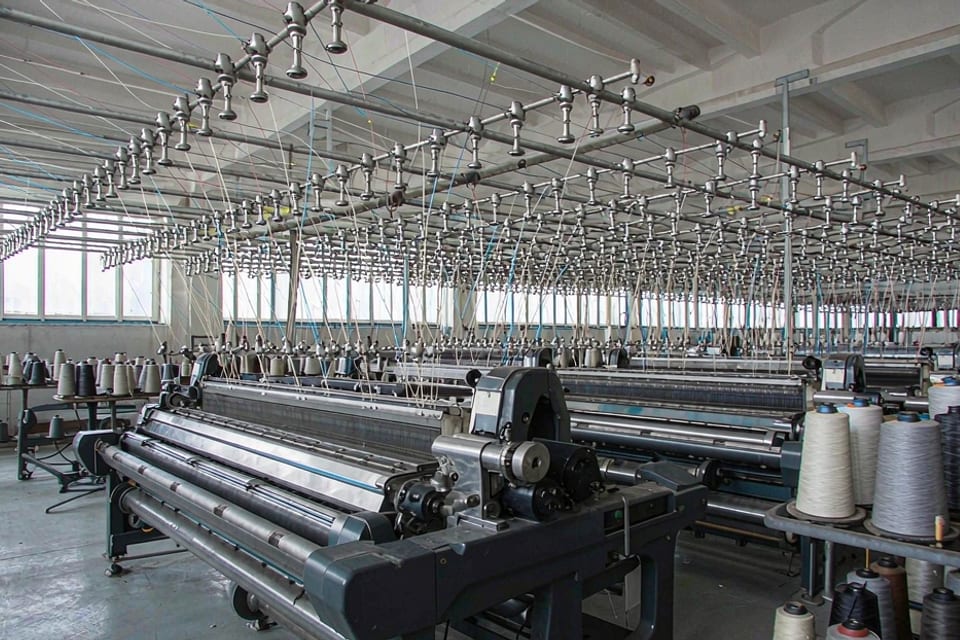
In textile production we identified 7 parts that use stainless steel: commonly 316L / 304 / 321, with thicknesses from 1–400 mm.
7 Parts and Material Selection Checklist
| Part / Component | Recommended Grade | Spec / Thickness | Surface | Main Failure Mode | Reference Standard |
|---|---|---|---|---|---|
| J-type high-temperature high-speed dyeing machine cylinder | 316L/304/321 | Wall thickness approx. 4 mm | 2B/pickled and passivated | Chloride SCC: dye liquor contains Cl⁻, 140°C far exceeds the ~60°C critical temperature for austenitic SCC; cracks initiate at welds/flanges/HAZ | GB/T 3280; GB/T 150; GB/T 4334 |
| Dye vat heat exchanger tube bundle/welds | 316L | Tube wall 1.0–2.0 mm | Pickled/bright | Cl⁻ enrichment in steam condensate + welding residual stress → weld SCC | GB/T 151; GB/T 4334 |
| Guide roller (shaft/roller surface) | 304/316L | Roller surface φ100–400 mm; wall thickness 2–6 mm | Mirror/HL | Dye + auxiliaries + acid/alkali corrosion; 120h salt spray with no rust spots is a common acceptance criterion | GB/T 3280; FZ/T 90001 series |
| Bleaching tank/mercerizing machine alkali liquor tank | 316L | 2.0–6.0 mm | 2B/pickled | Pitting from chlorine-containing bleach + stress corrosion from concentrated alkali | GB/T 3280 |
| Coagulation bath tank/piping | 316L/904L | 2.0–6.0 mm | 2B/pickled | Sulfuric acid/sodium thiocyanate + high temperature + Cl⁻ | GB/T 3280; ASTM A240 |
| Spinning beam/metering pump | 316L | Forgings/plate 5–30 mm | Machined/mirror | High-temperature polymer degradation corrosion + wear | GB/T 3280; GB/T 1220 |
| Spunlace head/forming mesh | 304/316L | 1.0–3.0 mm | 2B/perforated | High-pressure water erosion + fiber abrasion + corrosion | GB/T 3280 |
The table showsstandard configurations. The same part may shift from 304 to 316L or 2205 depending on medium, temperature and welding method — stating the service conditions clearly is easier than specifying a grade directly.
Selection Highlights
- The most frequently specified grades in this industry are 316L (7), 304 (3) and 321 (1) — the numbers in parentheses indicate how many parts involve each grade, a useful starting point for quoting and material stocking.
- Chlorides and salts are the most common corrosion sources (pitting, crevice corrosion) (5/7 items affected).
- For welded parts, watch for sensitization and chloride stress corrosion cracking (SCC) (3/7 items affected).
- Thickness range spans 1–400 mm: thin sheet is mostly for formed parts (consider bending springback and drawing cracks), while thick plate is mostly for welded structural parts (consider heat input and sensitization).
FAQ
Which stainless steel is used most in the textile industry?
Across the 7 parts in this volume, the most common grades are 316L (7 items), 304 (3 items) and 321 (1 item). For any specific part, medium and temperature still govern — for example, a stainless steel worktop exposed to salt water should move from 304 to 316L.
Which parts are most prone to problems?
Based on the failure descriptions, a typical case is the "J-type high-temperature high-speed dyeing machine cylinder": chloride SCC — the dye liquor contains Cl⁻, 140°C far exceeds the ~60°C critical temperature for austenitic SCC, and cracks initiate at welds/flanges/HAZ; recommended grades 316L/304/321, wall thickness approx. 4 mm. For such service conditions, specify medium concentration, temperature and cleaning method at the drawing stage.
What thickness should generally be selected?
The thickness range in the checklist is 1–400 mm. Thin sheet is governed by forming and surface finish; thick plate by welding and structural strength. Values also vary between equipment makers for the same part — verify against your drawings or service conditions.
Related Materials and Adjacent Industries
应用部位7 个
常用厚度1–400mm
常用牌号400/316L