
B12 · Medical & Healthcare
Stainless Steel Sheet for Medical & Healthcare: 304/316L Selection Guide and 5-Part Checklist
In medical and healthcare, we've identified 5 parts that use stainless steel: commonly 304 / 316L / 420, with thicknesses ranging from 0.8–8 mm.
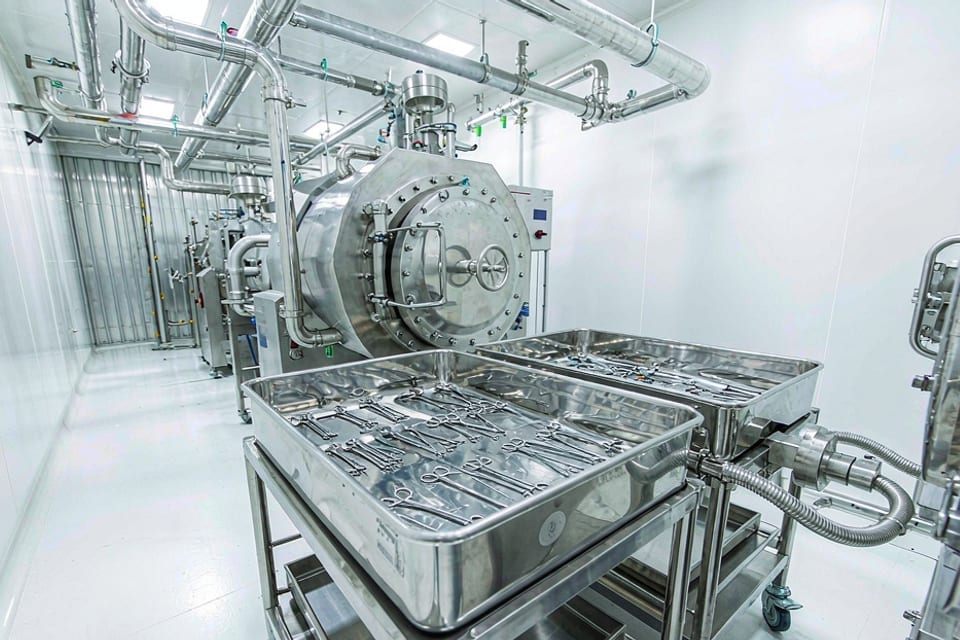
5 Parts and Material Selection Checklist
| Part / Component | Recommended Grade | Spec / Thickness | Surface | Primary Failure Modes | Reference Standard |
|---|---|---|---|---|---|
| Bone knife / osteotome | 420Mod/40Cr13 | Edge 1–3 mm | Bright/Shot-blasted | 420Mod 50–58HRC; 40Cr13 470–660HV | Edge wear + chipping + boiling water test corrosion |
| Surgical scissors | 20Cr13/420 | Edge 1–2 mm | Bright/Dull | 20Cr13 40–48HRC; 420 48–56HRC | Edge wear + pivot loosening + corrosion |
| Drill bit / bone drill | 420b/440C | φ2–8 mm | Polished/Coated | 420b 48–56HRC; 440C 58–62HRC | Cutting edge wear + heat cracking + corrosion |
| Forceps / needle holder / retractor | 12Cr13/20Cr13/05Cr17Ni4Cu4Nb/304/316L | 1–3 mm | Bright/Dull/Passivated | 38–45HRC; hardness difference between two halves ≤4HRC | Elastic failure + hinge wear + corrosion |
| Sterilization tray / mesh basket / instrument cart / bed frame | 304/316L | 0.8–3.0 mm | 2B/Electropolished/Passivated | Non-hardenable | Repeated steam sterilization at 134°C + cleaning agents + pitting |
The table showsstandard configurations. The same part may switch from 304 to 316L or 2205 depending on media, temperature and welding method — specifying the service conditions clearly is more efficient than simply naming a grade.
Selection Highlights
- The most frequently appearing grades in this industry are 304 (2), 316L (2), 420 (1) — the number in parentheses indicates how many parts involve that grade, serving as a starting point for quoting and material planning.
- Thickness range spans 0.8–8 mm: thin sheets are mostly formed parts (consider bending springback and deep-drawing cracking), while thick plates are mostly welded structural components (consider heat input and sensitization).
FAQ
Which stainless steel is most used in medical & healthcare?
Based on the 5 parts in this catalog, the most common are 304 (2 items), 316L (2 items) and 420 (1 item). For any specific part, media and temperature still govern the choice — for example, a stainless steel worktop exposed to saline should be upgraded from 304 to 316L.
Which parts are most prone to problems?
Based on failure descriptions, the typical case is "Bone knife / osteotome": 420Mod 50–58HRC; 40Cr13 470–660HV; recommended grade 420Mod/40Cr13, spec edge 1–3 mm. For such service conditions, we recommend specifying media concentration, temperature and cleaning method at the drawing stage.
What thickness should I choose?
The thickness range in the checklist is 0.8–8 mm. For thin sheets, focus on formability and surface; for thick plates, focus on welding and structural strength. Values may vary between equipment manufacturers for the same part — verify against your drawings or service conditions.
Related Materials and Adjacent Industries
应用部位5 个
常用厚度0.8–8mm